Everyday smart glasses are the models built to replace the pair you already wear, not to add a gadget on top of it. That sounds like marketing until you turn it into numbers, which is exactly what this page does: every pick in the ranking below records seventy grams or less on the scale, and the scoring rewards the things that decide whether glasses survive a full day on your face — recorded weight, battery measured in hours rather than promises, a real prescription path, and the assistant features that make them more useful than plain frames between charges. Everything in the list is recomputed from the product database on every build, so when a spec sheet changes, this page changes with it. If your first question is not “can I wear these all day” but “which glasses are lightest, full stop”, the lightest smart glasses ranking sorts the whole catalog by the scale alone.
Do smart glasses look like normal glasses yet?
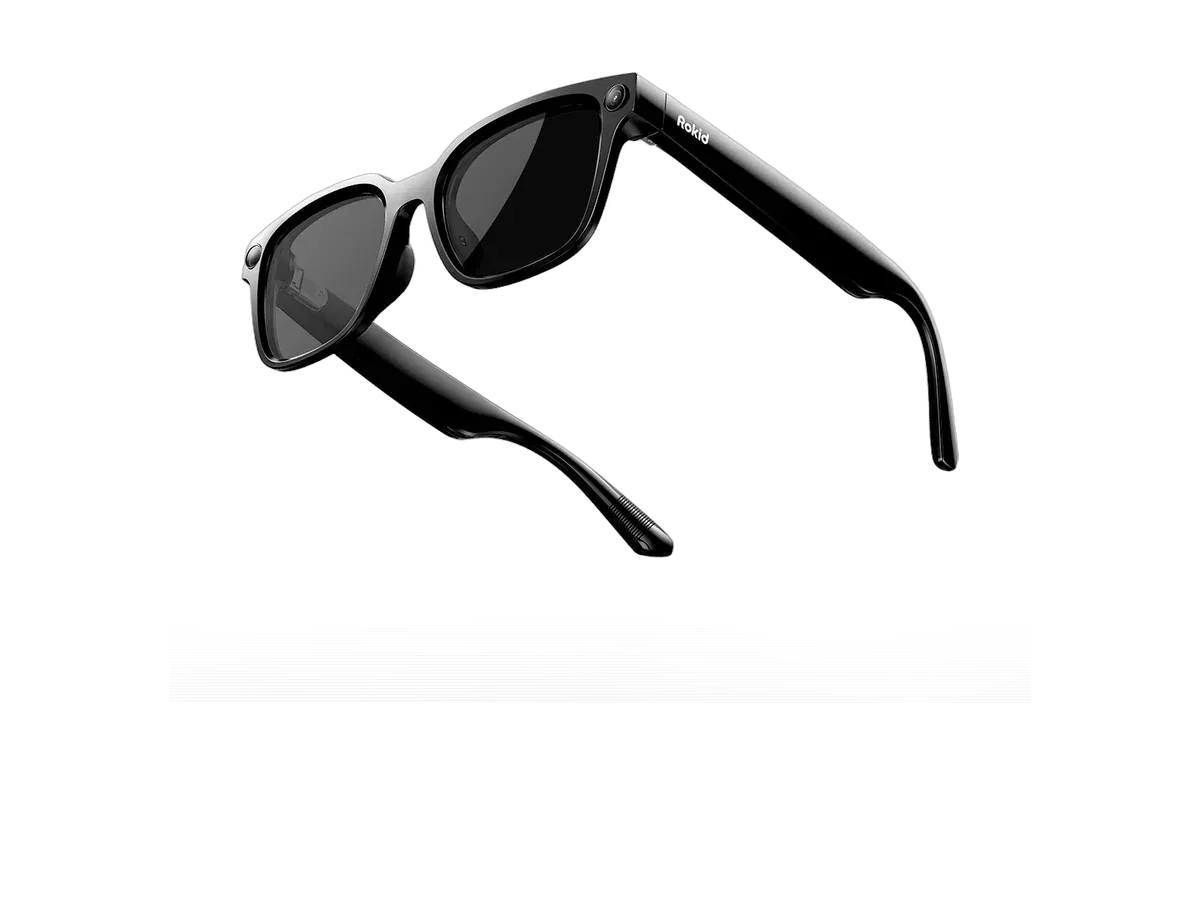
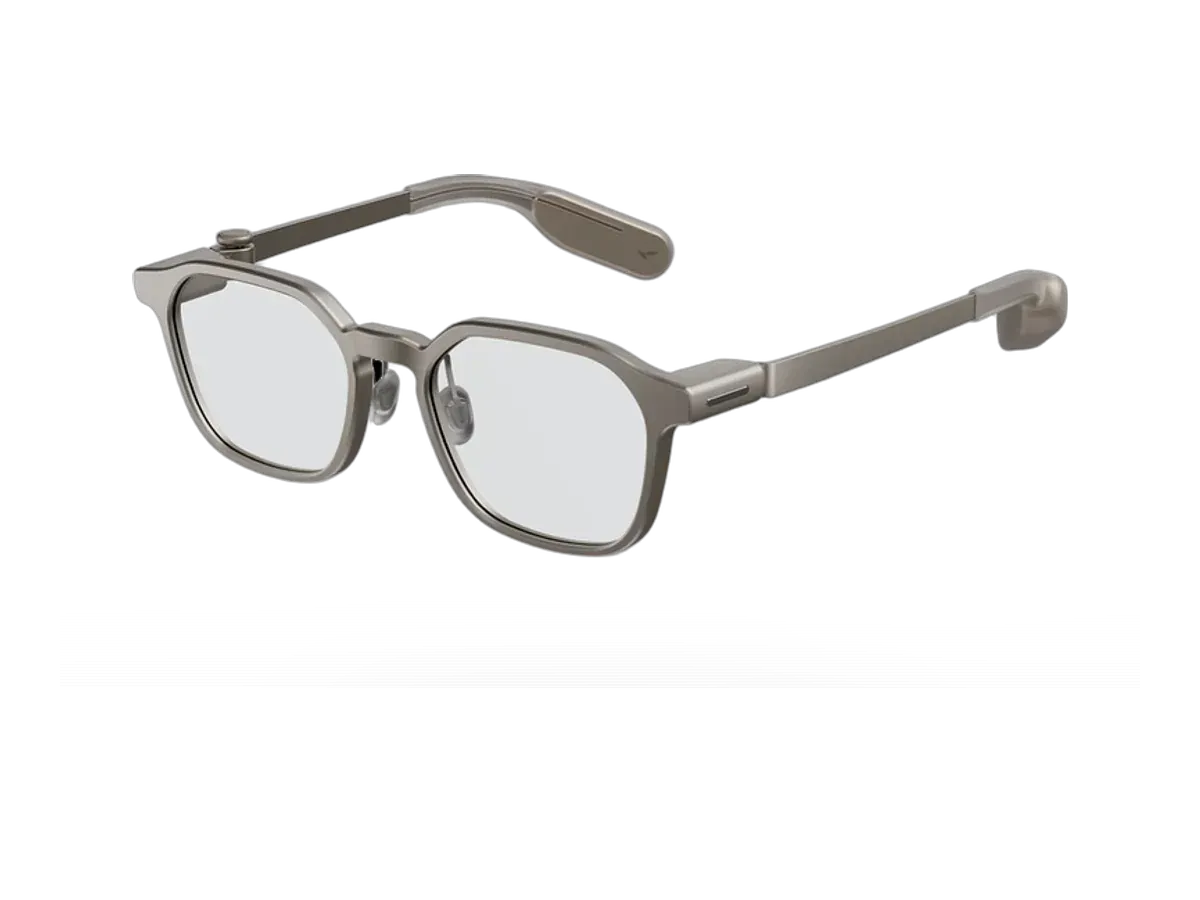
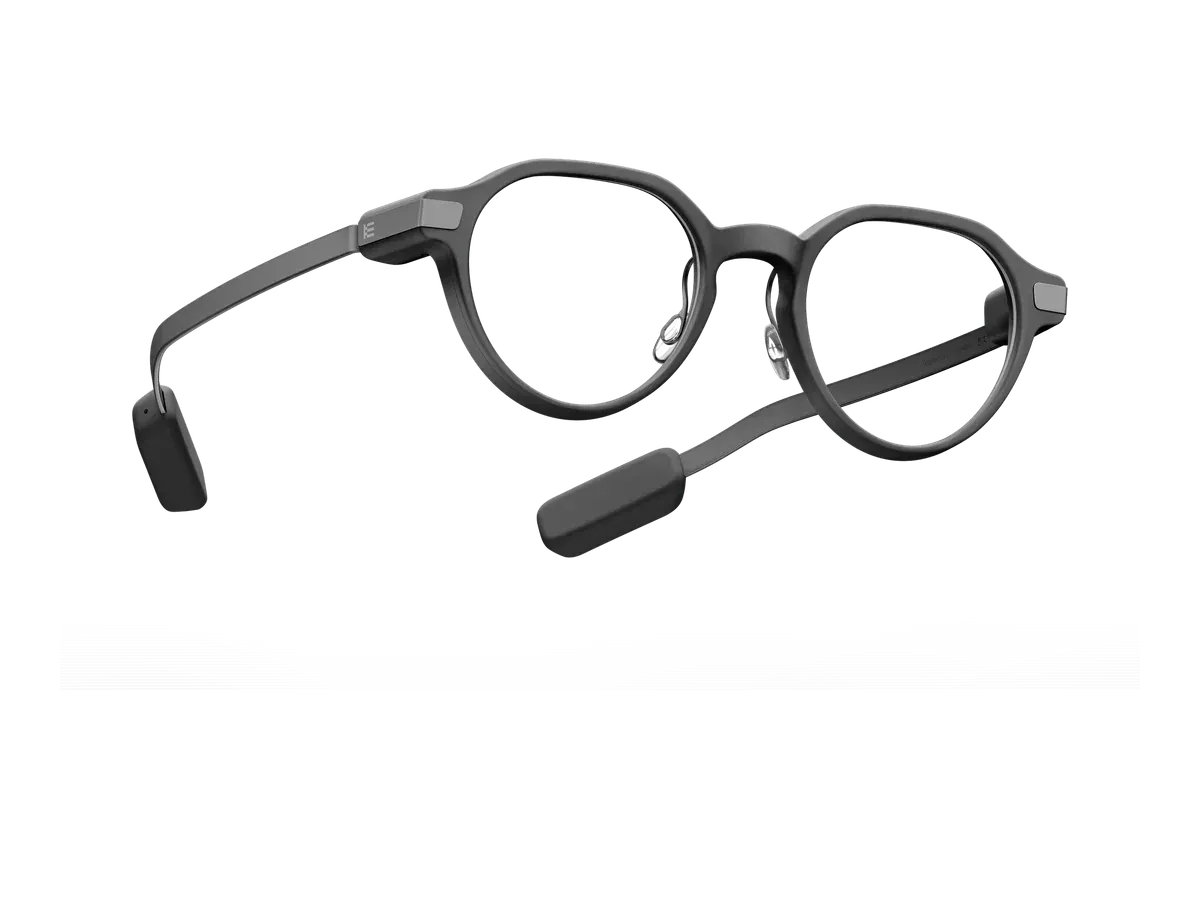
This is the question behind most searches for stylish smart glasses, and it deserves a straight answer: some genuinely do, and the way to tell is recorded in the database rather than in press photos. Frame shape is a spec field here, and it reads like an optician’s wall — wayfarer silhouettes, rounds, rectangles, panto shapes, even a cat-eye option — alongside a second cluster of wraparound and visor designs that will never be mistaken for ordinary eyewear. That split is the honest map of the category. The classic shapes cover the models built to disappear into your day; the wraparounds and visors mostly belong to sport and big-screen designs that trade street looks for capability, and they live on other pages of this site.
What actually makes a pair look like normal glasses is less the front of the frame than the sides and the grams. Electronics live in the temples, so the giveaway is temple thickness — a slab-sided arm reads as “device” from across a room. Weight is the other tell, because heavy frames force thicker construction and you carry the difference on your nose and ears all day. As a reference point, ordinary acetate eyeglasses run roughly twenty to thirty-five grams; the lightest recorded models in this ranking sit close enough to that band that the difference stops being visible or noticeable, while everything near the seventy-gram ceiling is unmistakably wearing technology. Color helps too, and it is also recorded: a good share of the catalog lists real color and finish options rather than one gadget-black shell, which matters if the frames are going to be part of how you dress rather than a piece of equipment you put up with.
One more style note, because the searches ask: there is no meaningful split between smart glasses for men and smart glasses for women. The market ships unisex frames in the same handful of classic shapes, and fit comes down to head size and nose bridge rather than gender. Buy on the recorded shape, the recorded weight, and — if the maker lists them — the size variants, exactly as you would with ordinary frames.
The seventy-gram line, and why grams are the spec that matters
The ranking’s entry gate is recorded weight at or under seventy grams, and the scoring tiers reward every step lighter. The reasoning is physiological, not aesthetic. Your nose and ears carry the whole load, and the difference between comfortable-for-an-hour and forgot-I-was-wearing-them lives in a surprisingly narrow band: frames in the forty-gram class genuinely disappear; the fifty-and-sixty class is fine for a workday but you notice it by evening; anything approaching the ceiling is a conscious wear, the way a heavy watch is. Nothing above the line belongs in an everyday conversation at all — those are session devices you put on for a movie or a game, and this site covers them in their own categories. The grams in the ranking are recorded manufacturer figures from each product’s spec record, not estimates, and the weight column links straight to the page where that number lives.
Battery: the all-day question nobody can style away
Weight decides whether you can wear glasses all day; battery decides whether there is any point. The recorded figures split the everyday class into two honest camps. Models built around audio, a voice assistant, and at most a small glanceable readout record batteries measured in double-digit hours or days — frames you charge the way you charge a toothbrush, occasionally and without thinking about it. Models that add a camera or richer display features record their battery in hours rather than days — for the heaviest-featured frames that means a midday top-up in the charging case if the assistant is part of your routine. Neither number is a scandal, but they are different ownership experiences, and the ranking weights recorded battery accordingly: a pair of glasses that dies at lunch is only half a pair of everyday glasses. The figures come from each product’s record, and where a manufacturer quotes usage-dependent ranges, the recorded number is the one they stand behind.
The prescription path
Glasses you wear all day are glasses you see through, so for most buyers the prescription question gates everything else. The good news is recorded across the category: most everyday-class models list a real prescription path, either prescription lenses fitted directly into the frame or magnetic and clip-in inserts made to your numbers. The practical differences are cost, cleanliness of the result, and supported range — direct fitting looks best, inserts are cheaper and swappable, and every maker publishes a supported diopter range that you should check against your actual prescription before ordering, especially at stronger corrections. The prescription smart glasses hub covers exactly this decision across the whole database, model by model, and the ranking on this page scores a recorded prescription path explicitly because glasses that cannot match your eyes are not everyday glasses at all.
The camera question, socially
A camera changes what glasses can do and how they are received, and the everyday class is where that trade bites hardest, because these are the frames you wear into meetings, locker rooms, and other people’s homes. The recorded split is real: a substantial camera-free cohort inside the everyday class keeps the assistant, the audio, and the readout while removing the lens entirely — nothing to explain, nothing to disable. Camera-equipped everyday models handle capture and visual questions, and current designs pair the lens with a visible recording light meant to come on when the camera is active; that light, and being straightforward with the people around you, is part of the deal of wearing one. Whether the capability is worth the occasional conversation is a personal call. If capture is the point for you, the camera glasses guide ranks that side of the catalog on the specs that matter for it; if you want the quietest possible frames, filter for the camera-free picks here.
Assistants, audio, and what “smart” buys you between charges
Strip away the spec sheet and an everyday pair earns its keep in small moments: hearing a message without pulling out a phone, asking a question and getting an answer while your hands are full, taking a call on a walk, glancing at a translation or a direction. The ranking rewards a recorded named assistant, working speakers and microphones, and voice control because those are the features that survive daily use — they need no charging case ceremony and no app open in your hand. The AI smart glasses hub ranks the catalog specifically on assistant hardware if that capability is your first priority; here it is one ingredient among several, weighted below the wearability specs, because on this page the frames have to be glasses first and a computer second.
How to choose, in order
Work down this list and the category gets simple. First, prescription: confirm the recorded path and the supported range against your numbers, because nothing else matters if you cannot see. Second, decide the camera question — it is binary, it shapes both battery and social life, and you cannot retrofit your choice. Third, weight: be honest about the difference between trying something on and wearing it for ten hours, and let the recorded grams arbitrate; when in doubt, lighter wins. Fourth, battery class: days or hours, charged like a toothbrush or managed like a phone. Style, at that point, mostly takes care of itself — the shapes that survive those four filters are the classic ones, recorded in the frame-shape field, and the remaining choice between a wayfarer and a round is one no spec sheet can make for you. If you finish the ranking torn between two models, compare them side by side — every number on this page comes from the same database, so the comparison is the same truth in a different layout.
Where the everyday class is going
The direction of travel is visible in the recorded specs from generation to generation: weight creeping down toward ordinary-eyewear territory, batteries stretching from hours toward days, prescription support moving from an afterthought to a launch feature, and assistants moving from a novelty to the main reason these frames beat the dumb pair in your drawer. The everyday class is where the whole category has to end up if smart glasses are ever going to be simply glasses. The ranking below is the recorded state of that race, recomputed every time the database changes — which, in this category, is often.